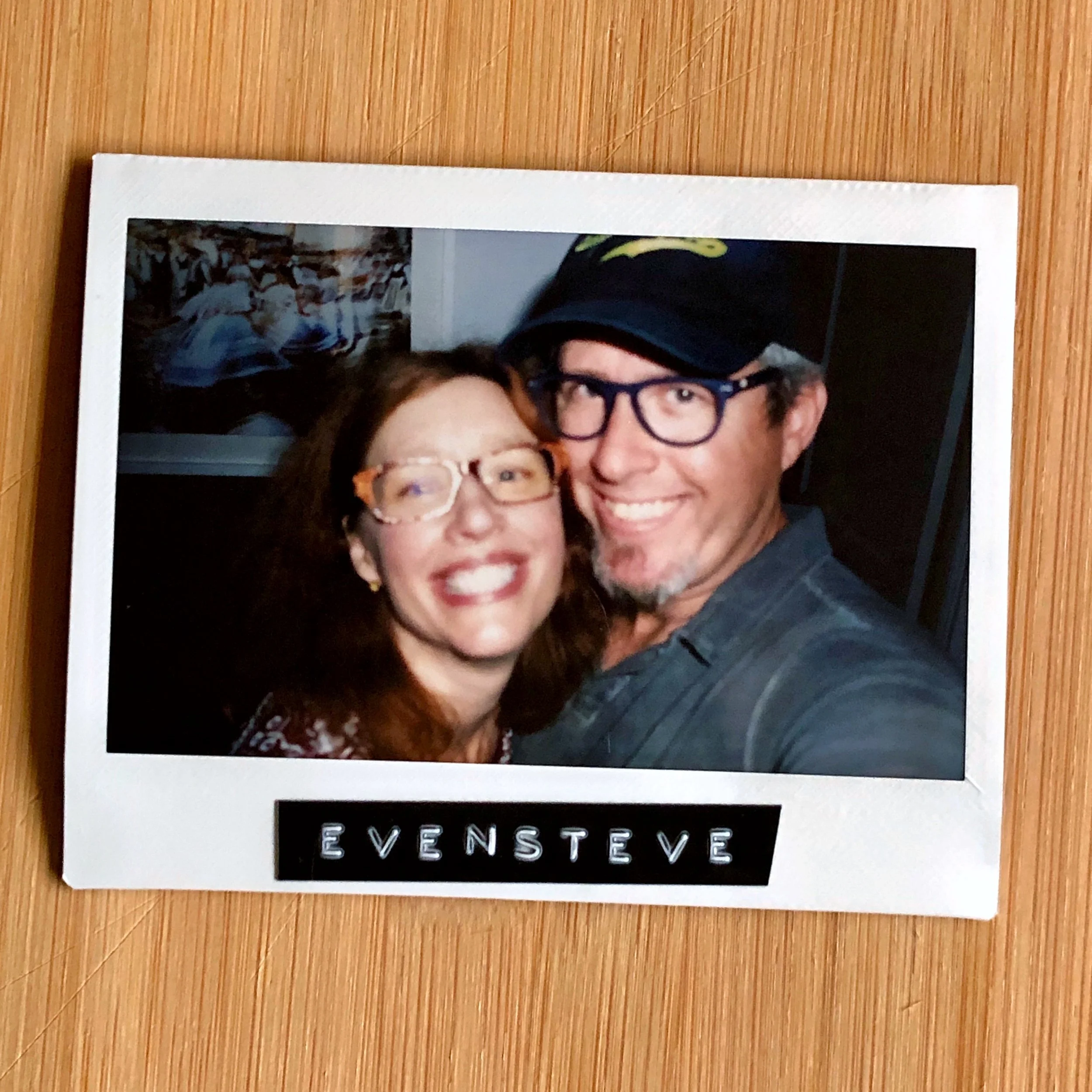
Practice
EveNSteve is the interdisciplinary collaborative art practice of author Eve O. Schaub and photographic artist Stephen Schaub, contemporary artists whose work combines photography, writing, film, and handmade materials.
Based in rural Vermont, their projects often bring together images, text, historical research, and crafted materials, unfolding slowly over time and rooted deeply in place.
Their work explores what it means to make things slowly in a world built for speed.

Background
Eve O. Schaub
Eve O. Schaub is an author, artist, and creative experimenter whose work explores the deeper rhythms of everyday life—the systems we participate in, the objects we consume, and the things we choose to make with our own hands.
From an early age she was unmistakably the “art kid,” drawing, painting, and filling notebooks with sketches and ideas. Art was not simply something she excelled at—it was the lens through which she understood the world.
Eve earned two degrees from Cornell University before completing her Master of Fine Arts at the Rochester Institute of Technology.
She later became the author of three widely read memoirs—Year of No Sugar, Year of No Clutter, and Year of No Garbage. Each book explores modern life through an immersive personal experiment. When Eve investigates an idea, she commits to it fully, often living inside the question for a year or more.
Her newest project, Growing a Dress in Her Backyard, extends that philosophy into the physical act of making.
The project begins with a seed.
Eve planted flax in her backyard garden and began a process few people today have witnessed from beginning to end. The plants are harvested, retted, broken, scutched, and hackled into fiber. The fibers are spun into linen thread, woven into cloth, and eventually sewn into a finished linen dress.
Seed to garment.
A process that once shaped human civilization has largely disappeared from everyday awareness.
Through Instagram, Facebook, TikTok, and YouTube, Eve shares the journey with an audience of more than a quarter million people, and several short videos documenting the project have been viewed more than five million times.
Yet the project is not ultimately about the dress.
It is about the deeper question the process reveals:
Why do human beings make things?
In a culture defined by speed, convenience, and disposability, making something slowly—patiently—becomes a form of inquiry. The project suggests that creativity and craft are not luxuries but fundamental human needs.
For Eve, making something by hand—whether a book, a garden, a piece of cloth, or a work of art—is a way of slowing down enough to see the world clearly.
Author Eve O. Schaub
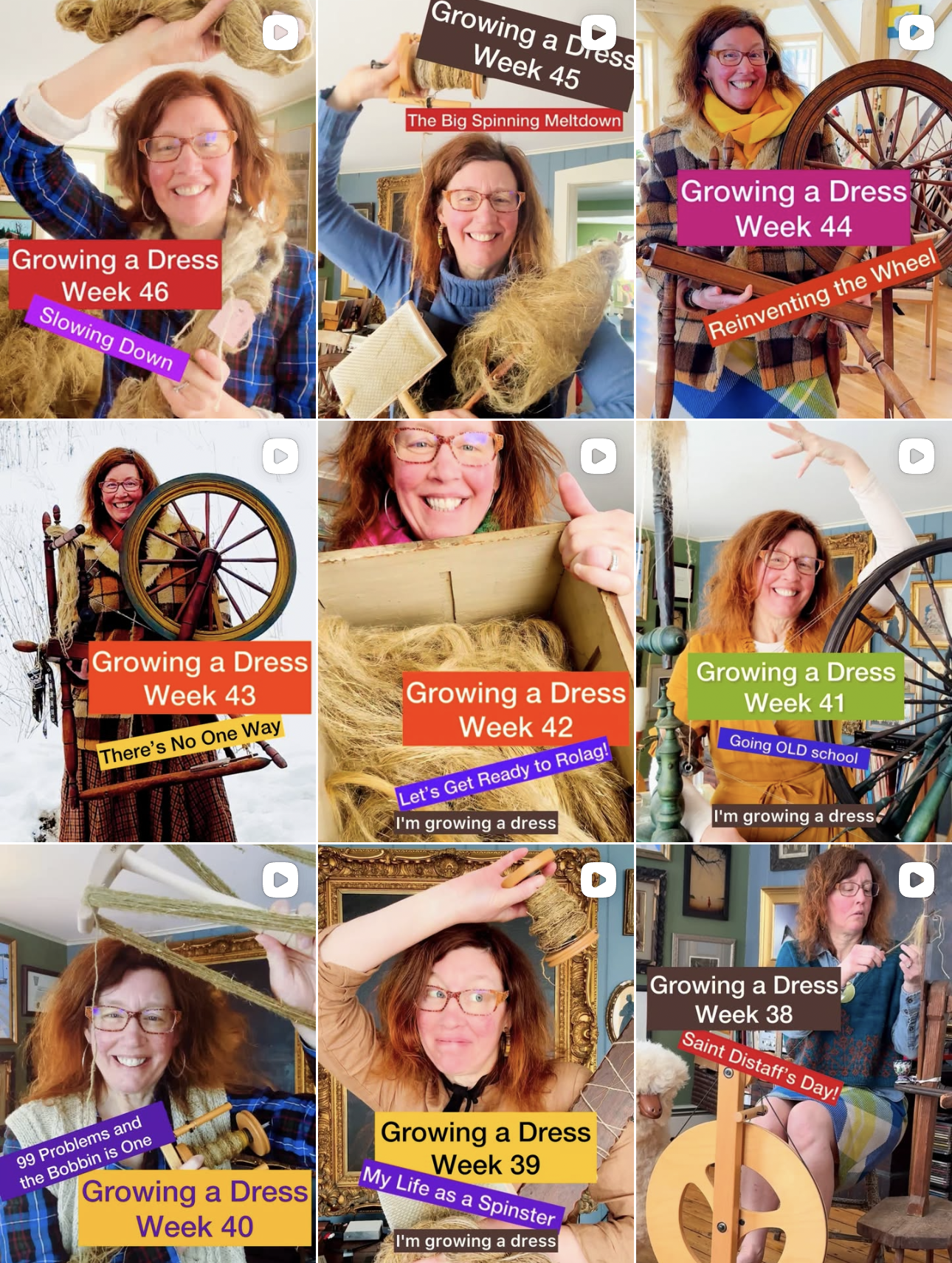
Eve’s Instagram Feed
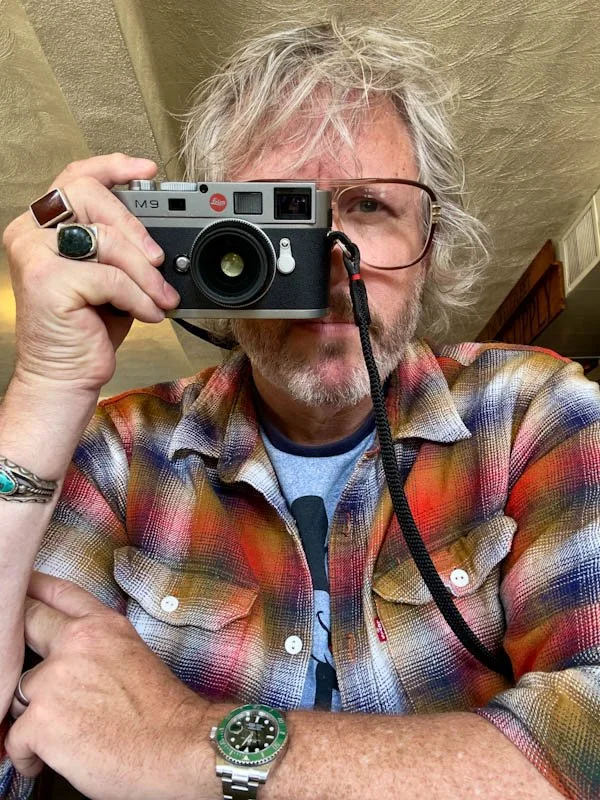
On Cape Cod Fall 2025 with my M9
Background
Stephen Schaub
Stephen Schaub is a contemporary photographic artist whose work explores atmosphere, memory, and the emotional landscapes that exist between places and stories.
His early life combined artistic curiosity with disciplined experimentation. As a child he attended art classes at the Toledo Museum of Art while spending long hours exploring the outdoors—experiences that fostered both creative imagination and independence.
After high school, uncertain of his path, Stephen enlisted in the United States Marine Corps on an open contract.
He was assigned MOS 5711: Nuclear, Biological, and Chemical Defense Specialist, a highly technical field combining science, training, and responsibility. Promoted to the rank of Corporal, he served as the NBC NCO for 3rd Battalion, 2nd Marines.
During Operation Desert Shield and Operation Desert Storm, he deployed to the Persian Gulf as part of the Fourth Marine Expeditionary Brigade, one of the largest amphibious operations since the Korean War. For his service during the Gulf War he received the Navy Achievement Medal, presented by Colonel James Conway, later the 34th Commandant of the Marine Corps.
While sitting on the deck of the USS Raleigh (LPD-1), watching the battleships Wisconsin and Missouri fire their massive guns while Harrier jets roared overhead, Stephen made the most peaceful decision of his life:
He would become an artist.
The discipline he developed in the Marine Corps—precision, patience, and the refinement of process through repetition—later shaped his approach to photography and the slow, material-focused practice he now shares with Eve.
One Friday afternoon shortly before deployment, Stephen bought an inexpensive camera. By Monday morning, he knew photography would define the rest of his life. After returning from military service, he attended the Rochester Institute of Technology, studying commercial photography and developing the technical mastery that continues to inform his work today.
It was during his final year at RIT that he met Eve.
What began with a shared photography trip through the American Southwest—and a simple ride home—became a lifelong creative partnership.
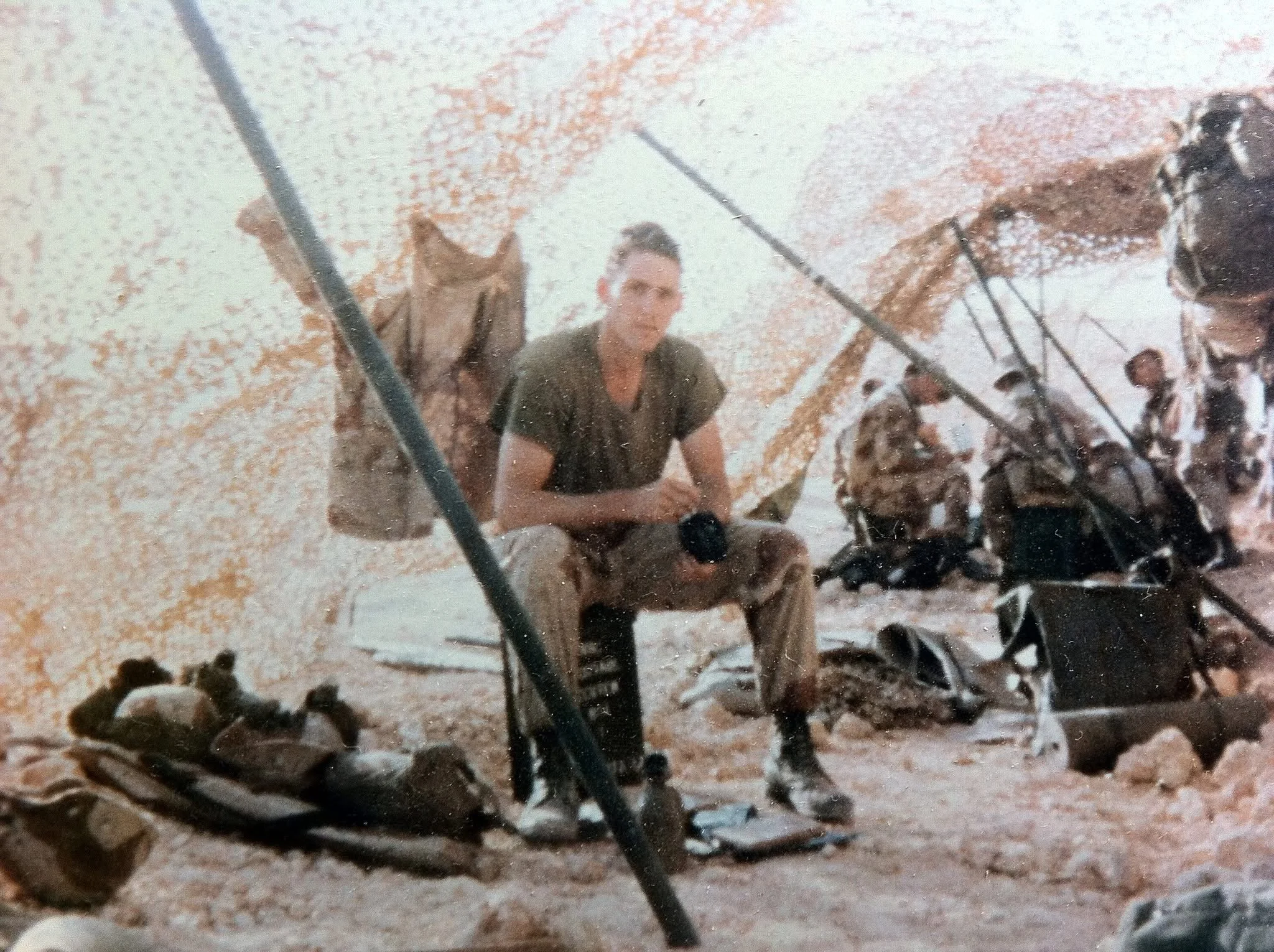
Corporal Schaub During the Gulf War
EveNSteve
For nearly two decades Eve and Stephen built independent creative careers while living and working side by side.
Eve was writing books and essays exploring modern life through lived experiments, while Stephen developed a career as a photographer, darkroom printer, and visual artist. Their practices continually overlapped. Stephen photographed Eve’s author portraits, Eve wrote essays for Stephen’s exhibitions, and they edited one another’s work while debating ideas late into the evening around the kitchen table.
Over time the boundary between their disciplines quietly dissolved.
What emerged was EveNSteve—a collaborative art practice where photography, writing, film, and handmade materials come together to explore landscape, memory, myth, and the fragile beauty of everyday life.
Living and working in rural Vermont has shaped this work profoundly. The rhythm of the seasons, the presence of history in old houses and fields, and the scale of the New England landscape have all become collaborators in their art.
Whether growing a dress from flax in the backyard or constructing photographs that blur the boundary between image and object, EveNSteve’s work returns to a simple question:
What does it mean to make something slowly in a world built for speed?
For Eve and Stephen, making—patiently, thoughtfully, and together—is not only creative practice.
It is a way of paying attention to the world.
EveNSteve is a studio practice built on time, place, and making.
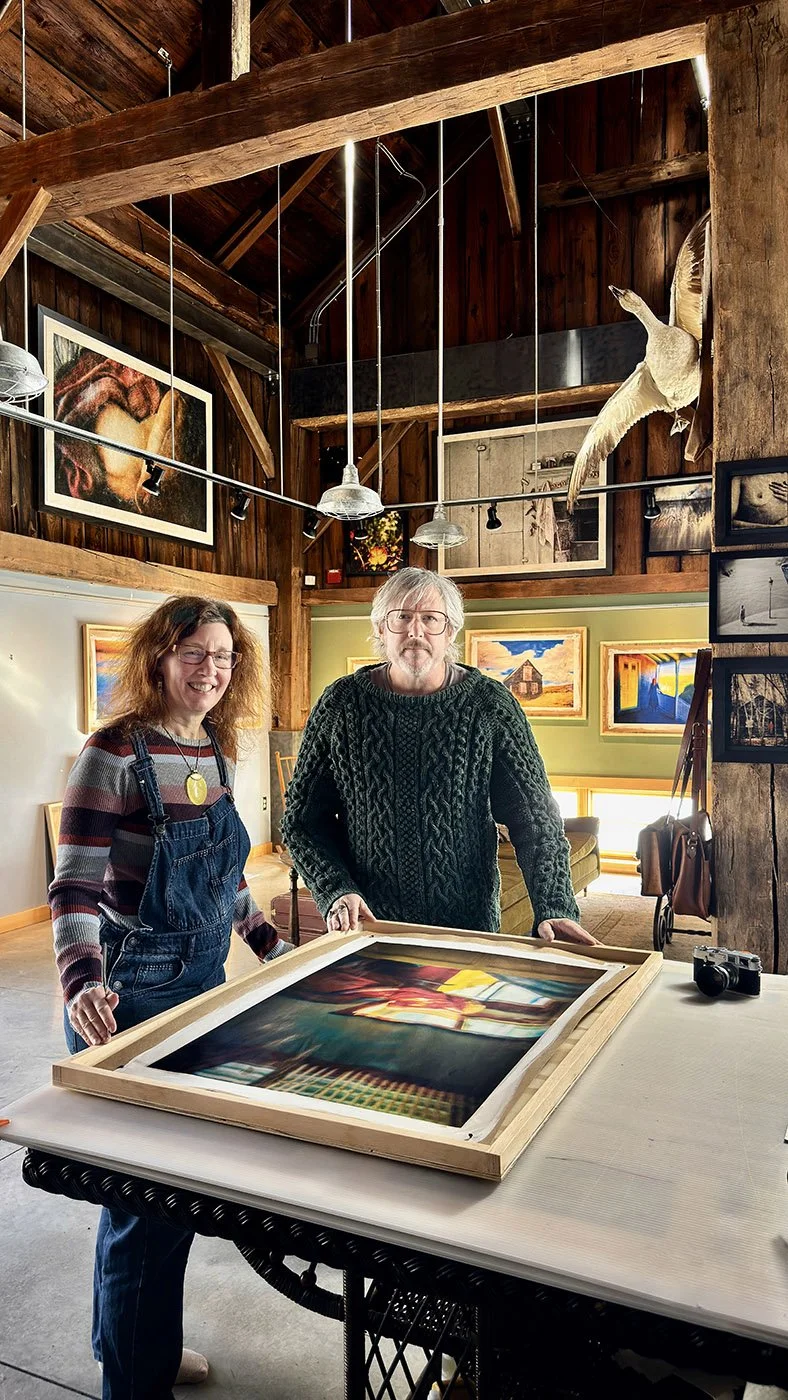
EveNSteve in the studio working on Tales of the Bittersweet artworks. 2026
Documentary of Steve’s artwork and process by Studio Skylight for CineStill Film right as EveNSteve was taking shape, in the video you get to see some of the very first EveNSteve artworks in process.